Plaster Channel Screed
Trim Purpose
Specs, MSDS, and LEED Information for Flannery Trims & Products
Flannery’s Plaster Channel Screeds create an aesthetic reveal in any stucco wall system. Channel Screeds break up plaster or stucco walls by creating horizontal and vertical reveal lines. Flannery’s Plaster Channel Screeds come in a number of depths for different stucco thicknesses as well as a number of reveal widths for just the right design look. Select sizes of Flannery’s Plaster Channel Screeds are also available with Aluminum Alignment Splices or Vinyl Connectors to ease the installation process and create crisp and clean butt joints and lines. If you are looking to achieve a small depth at 1/4”, take a look at our Plaster Control Joint.

Manufacturer's Specifications
Flannery’s Plaster Channel Screeds are standard extruded aluminum alloy 6063 T5 and have a .050” nominal wall thickness. Aluminum Plaster trims come in 10′ lengths and shall have a standard Clear Anodized Finish. Mill Finish (for field priming & painting), Chem-film finish, or other factory finishes, and custom paint orders are available. You can view our factory finishes to see if we have what you are looking for. If you do not see the finish, you are looking for, chances are we can color-match it or we already have it!
This product is also known in the industry as a DCS, RH, RP, RS, and RD.
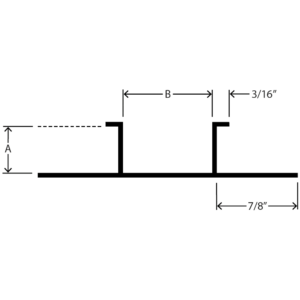
| Part No. | “A” Depth | “B” Width | Stucco Thickness | Vinyl Connector | Stock Item | Venting Available | Downloads |
|---|---|---|---|---|---|---|---|
| PCS 375-50 | 3/8″ | 1/2″ | 1/2″ | Yes | Yes | Yes |
 
|
| PCS 375-75 | 3/8″ | 3/4″ | 1/2″ | Yes | Yes | Yes |
|
| PCS 375-100 | 3/8″ | 1″ | 1/2″ | Yes | Yes | Yes |
|
| PCS 375-150 | 3/8″ | 1-1/2″ | 1/2″ | Yes | Yes | Yes |
|
| PCS 50-25 | 1/2″ | 1/4″ | 5/8″ | Yes | Yes | N/A |
|
| PCS 50-50 | 1/2″ | 1/2″ | 5/8″ | Yes | Yes | Yes |
|
| PCS 50-75 | 1/2″ | 3/4″ | 5/8″ | Yes | Yes | Yes |
|
| PCS 50-100 | 1/2″ | 1″ | 5/8″ | Yes | Yes | Yes |
|
| PCS 50-150 | 1/2″ | 1-1/2″ | 5/8″ | Yes | Yes | Yes |
|
| PCS 50-200 | 1/2″ | 2″ | 5/8″ | Yes | Yes | Yes |
|
| PCS 50-250 | 1/2″ | 2-1/2″ | 5/8″ | Yes | Yes | Yes |
|
| PCS 50-300 | 1/2″ | 3″ | 5/8″ | N/A | Yes | Yes |
|
| PCS 50-400 | 1/2″ | 4″ | 5/8″ | N/A | Yes | Yes |
|
| PCS 50-600 | 1/2″ | 6″ | 5/8″ | N/A | Yes | Yes |
|
| Part No. | “A” Depth | “B” Width | Stucco Thickness | Vinyl Connector | Stock Item | Venting Available | Downloads |
|---|---|---|---|---|---|---|---|
| PCS 625-50 | 5/8″ | 1/2″ | 3/4″ | Yes | Yes | Yes |
|
| PCS 625-75 | 5/8″ | 3/4″ | 3/4″ | Yes | Yes | Yes |
|
| PCS 625-100 | 5/8″ | 1″ | 3/4″ | Yes | Yes | Yes |
|
| PCS 625-150 | 5/8″ | 1-1/2″ | 3/4″ | Yes | Yes | Yes |
|
| PCS 625-200 | 5/8″ | 2″ | 3/4″ | Yes | Yes | Yes |
|
| PCS 625-300 | 5/8″ | 3″ | 3/4″ | N/A | Yes | Yes |
|
| PCS 625-400 | 5/8″ | 4″ | 3/4″ | N/A | Yes | Yes |
|
| PCS 75-25 | 3/4″ | 1/4″ | 7/8″ | Yes | Yes | N/A |
|
| PCS 75-50 | 3/4″ | 1/2″ | 7/8″ | Yes | Yes | Yes |
|
| PCS 75-75 | 3/4″ | 3/4″ | 7/8″ | Yes | Yes | Yes |
|
| PCS 75-100 | 3/4″ | 1″ | 7/8″ | Yes | Yes | Yes |
|
| PCS 75-150 | 3/4″ | 1-1/2″ | 7/8″ | Yes | Yes | Yes |
|
| PCS 75-200 | 3/4″ | 2″ | 7/8″ | Yes | Yes | Yes |
|
| PCS 75-250 | 3/4″ | 2-1/2″ | 7/8″ | Yes | Yes | Yes |
|
| PCS 75-300 | 3/4″ | 3″ | 7/8″ | N/A | Yes | Yes |
|
| PCS 75-400 | 3/4″ | 4″ | 7/8″ | N/A | Yes | Yes |
|
| PCS 75-600 | 3/4″ | 6″ | 7/8″ | N/A | Yes | Yes |
|
| PCS 100-75 | 7/8″ | 3/4″ | 1″ | Yes | No | N/A |
|
| PCS 100-100 | 7/8″ | 1″ | 1″ | Yes | No | N/A |
|
| PCS 1375-200 | 1 3/8” | 2” | 1 1/2” | Yes | No (custom) | N/A |
|
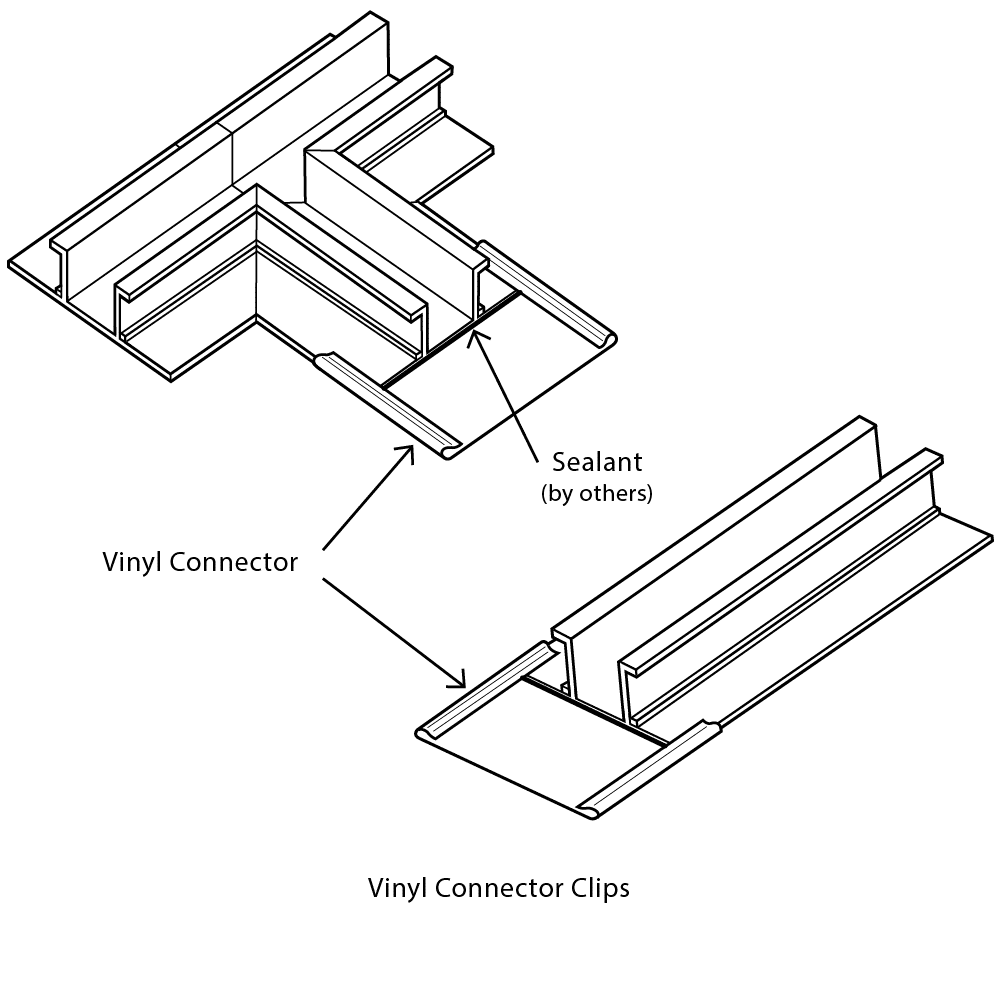
Install all Plaster Channel Screeds using full ten-foot lengths wherever possible. Attach Channel Screeds over the weather resistant barrier to the framing with nails, screws, or other approved fastening methods. All Channel Screeds must be cut accurately and installed with tight, neat joints. All nailing flanges must be covered with lath and all butt joints must be sealed. To assist the installer, Flannery provides vinyl connector clips with every stick of Channel Screed ordered. Manufacturer recommends that a carbide tip blade along with lubricant be used when cutting any aluminum trims.
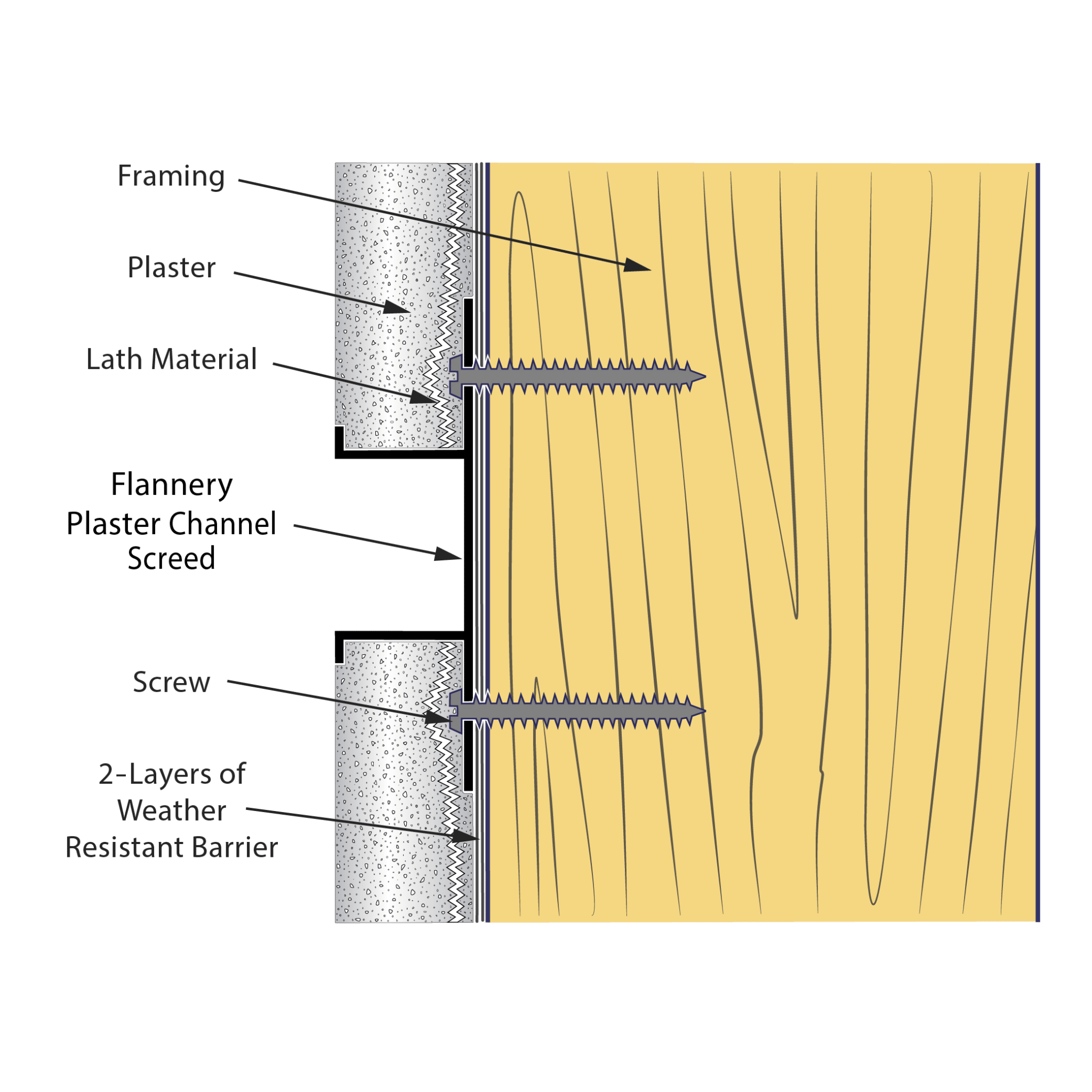
Aluminum Alignment Splices
Many of Flannery’s Plaster Channel Screeds come with Aluminum Alignment Splices to ease the installation process and create crisp and clean butt joints and lines. To assist the installer, Flannery also provides vinyl connector clips with most Channel Screed sizes.
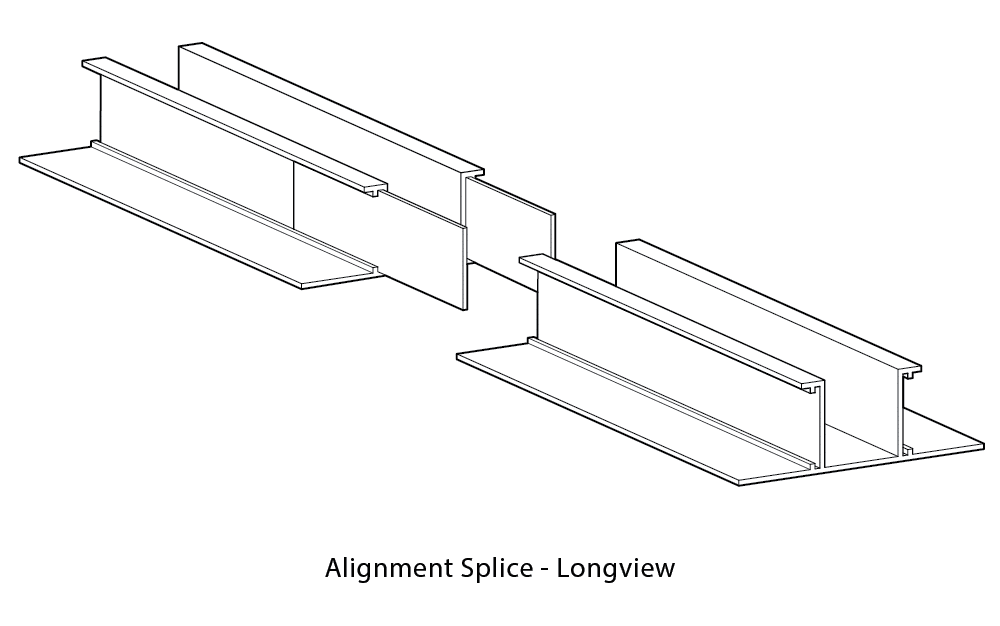
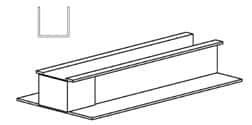
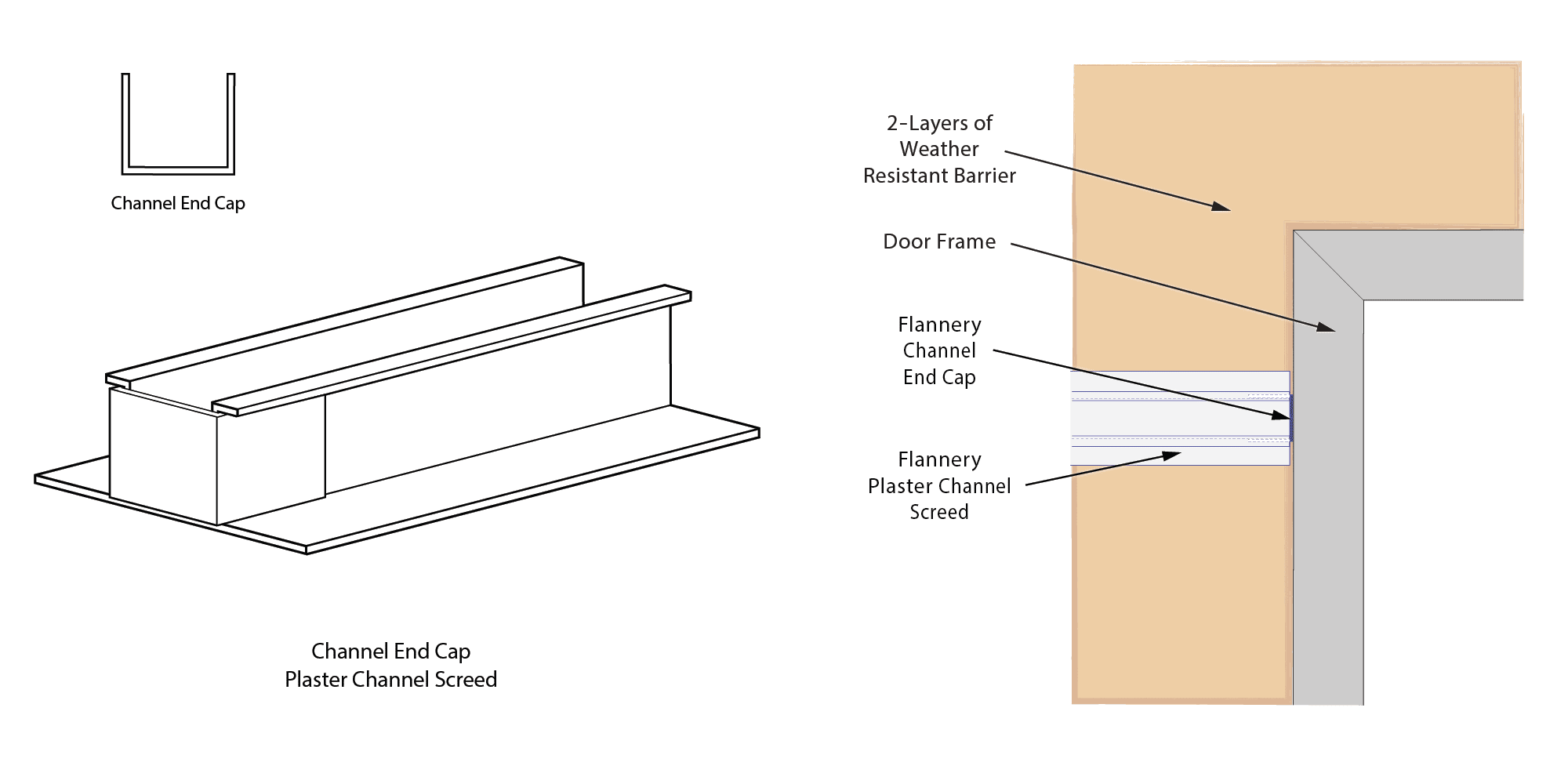
Channel End Caps
Flannery offers Channel End Caps for all sizes of the Plaster Channel Screed series. End Caps create a termination point for any Channel Screed where the channel may terminate against a dissimilar material such as a door or window frame. Channel End Caps can also be used when a channel terminates in the middle of a plaster wall.
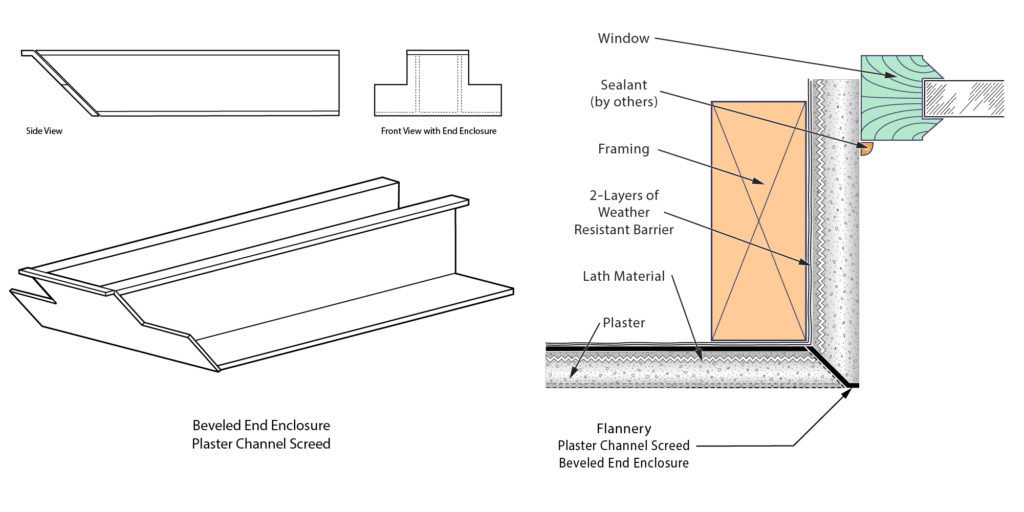
Beveled End Enclosure
The Beveled End Enclosure is a product that was designed to allow any Plaster Channel Screed to terminate properly at stucco corners. The unique angle and plaster key of the Beveled End Enclosure is ideal for separating the channel from the stucco layer particularly when a corner has welded wire corners installed. The Beveled End Enclosure is available for any size of Flannery’s Plaster Channel Screeds. Flannery can factory weld them to specific lengths of channel or provide them separately.
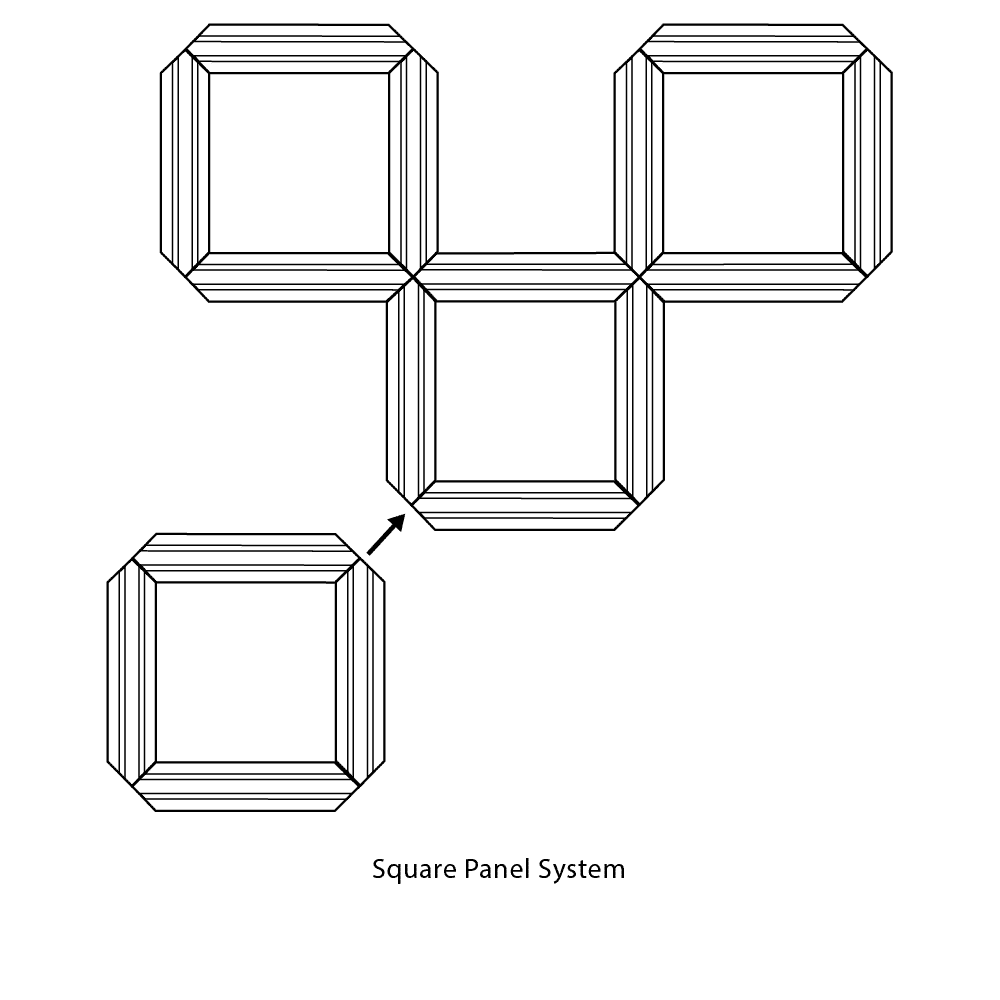
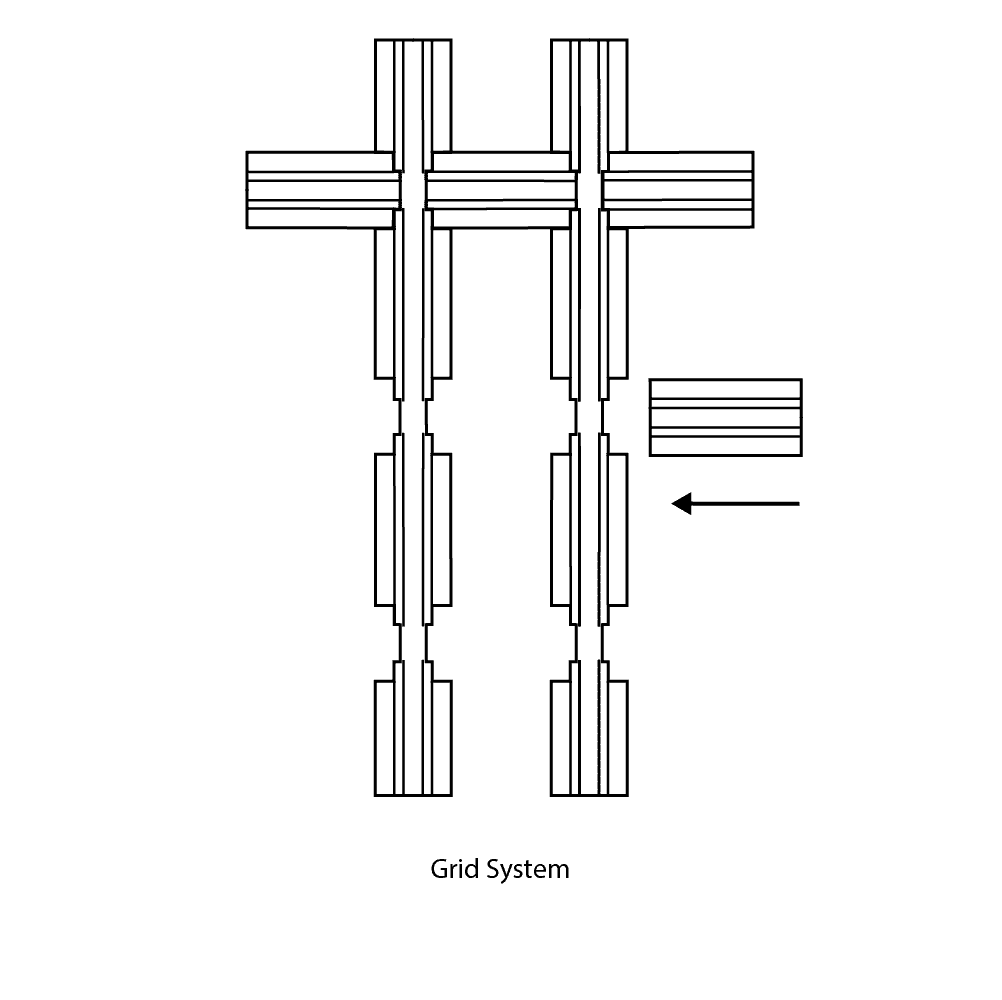
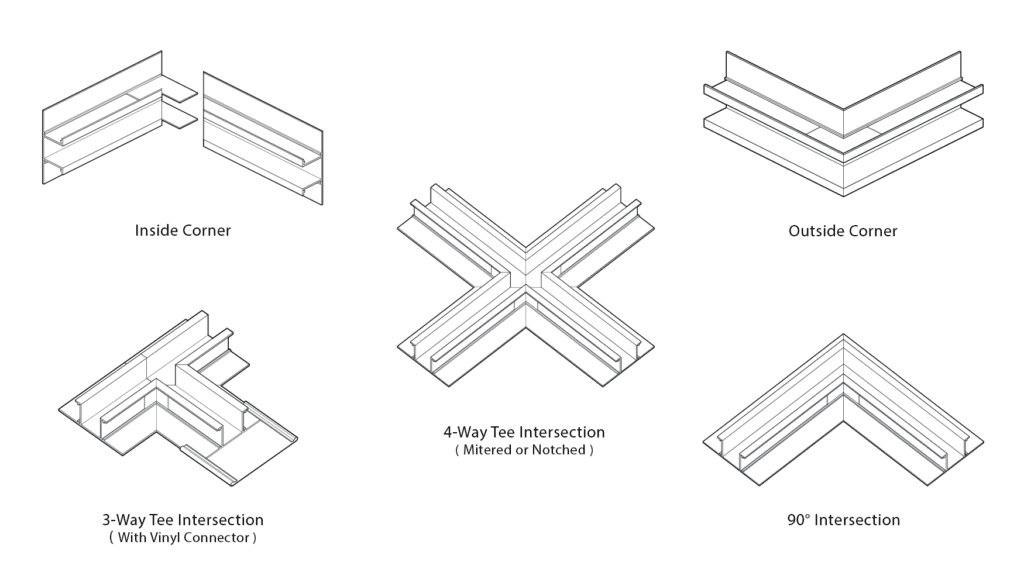
Flannery offers prefabricated intersections and corners for intricate building designs that utilize intersecting lines and bands on exterior walls. Prefabricated intersections and corners are mitered and then welded together at their attachment flanges, then vinyl tape is applied to the back of the reveal to prevent water intrusion. Factory welded intersections and corners come with 6” legs, however custom leg lengths can be ordered.
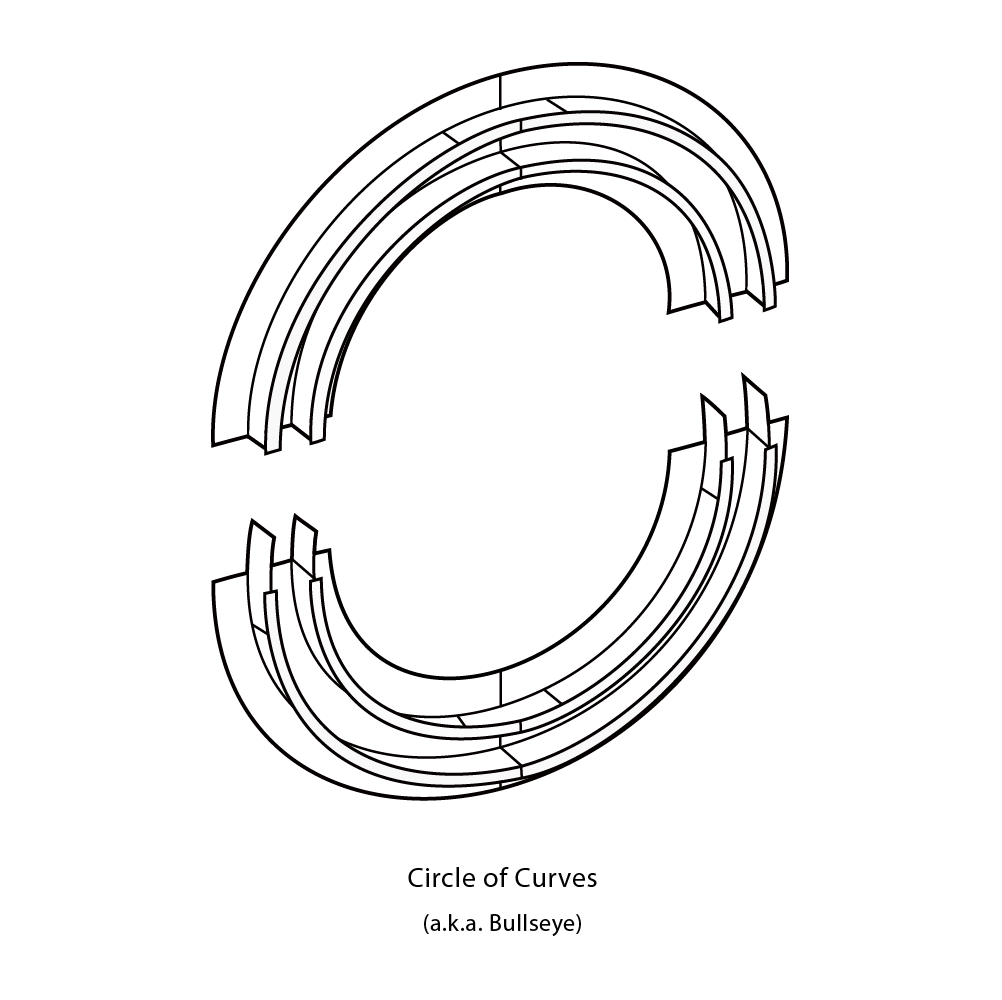
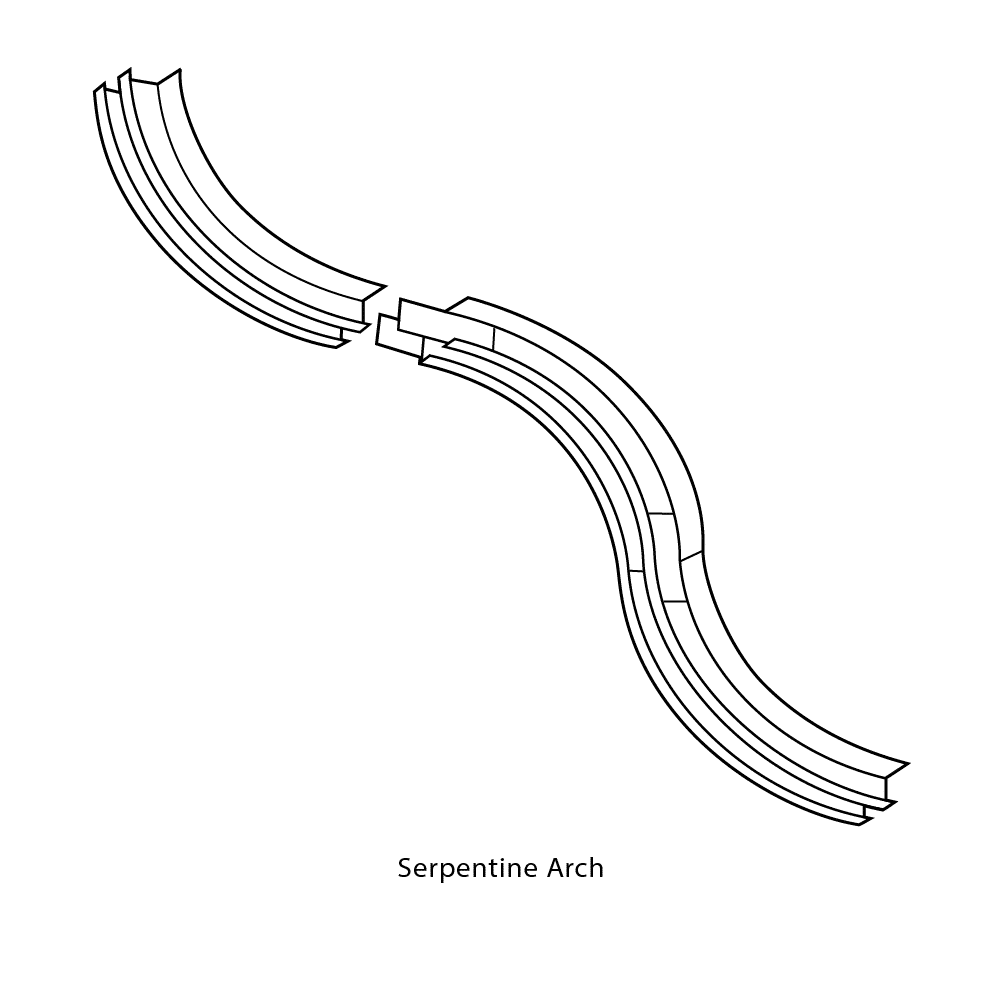
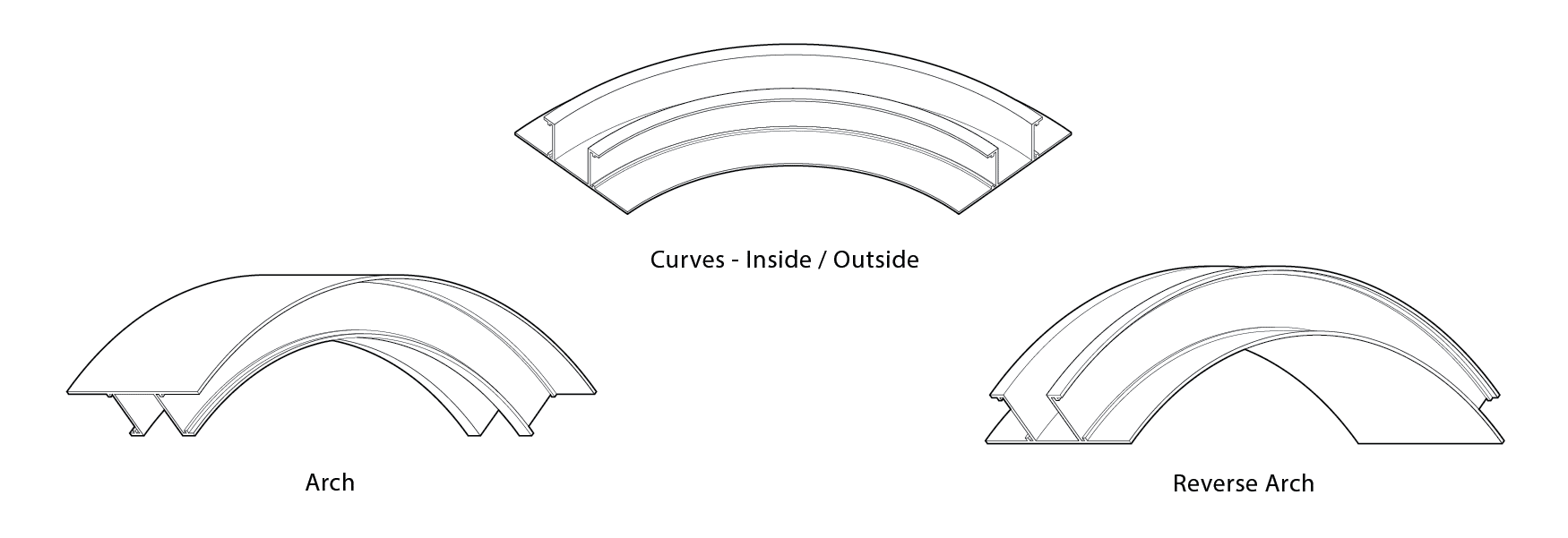
Flannery can radius Plaster Channel Screeds when the trim runs along a “curved” or “radiused” plane. Radiused material is bent to a project’s dimensional requirements and is considered a custom product. Download the Radius Form or view all of our radius forms.